Welcome to the second blog post. It's been a lot of hard work keeping up with college work, but I'm always excited to talk about the readings.
We have a very familiar topic today, and that's farming. More specifically, it's society after agriculture was discovered by humanity. Agriculture has changed society for the better, but also slightly for the worse, and that's what the readings have talked about today.
If you're following along, the sections I'll be talking about today are Breakthroughs to Agriculture, The Globalization of Agriculture, and Social Variation in the Age of Agriculture.
Breakthroughs to Agriculture
Humans used to be primarily gatherers and hunters until they discovered how to take advantage of animals and plants. That's when humans started domesticating a variety of animals and plants for mainly farm work.
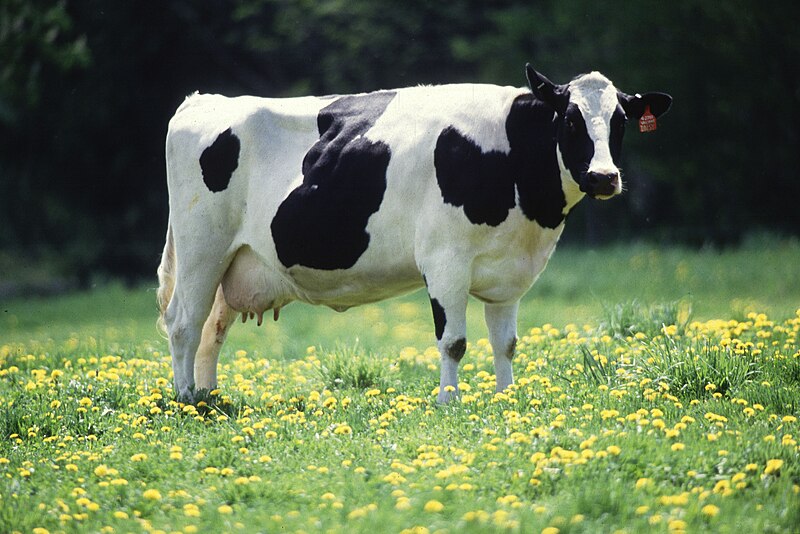
When reading, some readers might be confused when they read the small amount of animals that were domesticated back then, since exotic pets exist. However, domestication is not the same as taming; domestication is selective breeding to make animals and plants benefit humans. It takes generations of breeding to domesticate, not a few months of training a wild animal. Here's an example of the domestication process.
Anyway, the rise of agriculture coincided with natural global warming roughly 10,000 years ago, which may mean that humans farmed to adapt to the environment. Ironically, farming is also part of the reason global warming exists today, but the global warming back then was completely natural. It was the end of the Ice Age, and the woolly mammoths were dying out, so how about domesticating other large animals for food instead?
Oh, and farming is different in different parts of the world. North America wasn't planting kola nuts, and Africa wasn't planting domesticated teosinte (that's corn, by the way). This book knows not to generalize the world and its crops, and I'm happy it didn't.
The Globalization of Agriculture
Gatherer-hunters (that's the order the book says) and farmers used to live together in harmony, before most people saw gathering food as "ancient" and "uncivilized." Don't get me wrong; gathering and hunting is still a pastime for plenty of people today (such as mushroom gathering and hunting for sport). However, most people see it as just that: a pastime. Only a few do it today as a lifestyle.
A very sad example of this is Ishi, the man who was the last of his gatherer-hunter group, the Yahi. Unfortunately, Americans flooded California and massacred most of the Yahi community, and eventually, Ishi was the last of his people. After educating people about his culture for five years at a museum, he passed away from tuberculosis. This was the dark side of farming: driving non-farming cultures to extinction.
On the plus side, the human population increased exponentially! It took humanity 5,000 years to go from 6 million to 250 million people, an amazing achievement for any species. And this is despite the numerous diseases that spread because of farming. Many of those diseases would either have vaccines today (rabies, chicken pox, measles) or even be eradicated as of 2019 (smallpox). So humanity has solved some of the problems farming has brought us.
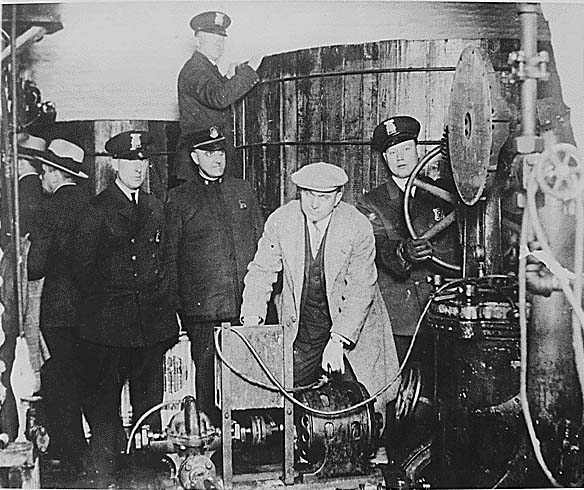
Finally, farming has brought us the one thing humanity just can't give up: alcohol. Yes, thank agriculture for the drink that may make the night better, but makes tomorrow worse. Hilariously, in roughly 1046 B.C.E, a Chinese ruler tried to ban wine, but was unsuccessful in his attempts. That sounds strangely familiar...
Social Variation in the Age of Agriculture
Farming helped people survive in environments they couldn't before. This is because humans could rely on animals to help them. They didn't have to eat mainly plants to survive in the desert anymore, because someone walked over to that society to sell meat or milk. This most likely contributed to the development of towns in the desert, or in very cold climates (like what the Clovis people did, but without having to worry about the woolly mammoth going extinct).
Then, there are the agricultural village societies that relied more on farming than a government. Women were more equal in some of these societies, and the closest thing they had to a government was the elders telling the youngsters what to do. It seems kind of like anarchy for us today, even when democracies are considered, but they were mostly civil. I wonder why that's the case...?
Finally, there are the chiefdoms, or the society that is the most like ours today. Chiefdoms still exist today, but they are not the same as kings or presidents. Instead, they are led by chiefs that relied on the people to trust them, usually without force. It's similar to how religious figures can have a group of people listen to them without having to resort to violence or the police.
All of those eventually evolved into what we have today: modern society. And it all started from people learning how to selectively breed species and put seeds into the ground to make it grow.
Next time, I'll talk about the first civilizations and how they formed. See you next time!

No comments:
Post a Comment