Hello, everyone!
Last time, I got a bit political and gave some advice to Andrew Yang. Today, we're going to talk about another topic that shouldn't be mentioned in the workplace: religion.
Since it's religion, I'll try to talk about it as objectively as possible. It's a very personal subject for many people, but some of the beauty of history comes from religion and how the teachings of religious leaders still lives on today.
Today, I'll talk about the entirety of Chapter 4 and a Close Reading, Serving is Different from Helping and Fixing.
The Beginning of Chapter 4
No matter how hard rulers try, religion can never be completely eliminated. Judaism is a great example of this, but the book also states that Confucianism had deal with its attempted replacement, the Communist Party. This failed greatly, as Confucianism and its teachings still survives to this day.
And that's not a bad thing at all. It's admirable how some religions have attempted to be eliminated, but have survived those efforts. As the Jewish saying goes, "They tried to kill us, we survived, let's eat."
And let's not forget how religion attempts to answer the seemingly impossible answers, such as, "What is the meaning of life?" and "What happens after we die?" So religion is also philosophical, not just a list of rules on how to behave.
This chapter focuses on how religion has shaped the human race, in some good ways... and a few bad ways.
China and the Search for Order
This book talks a lot about China, and that's because China, for most of history, has been powerful. So why wouldn't the book talk about the beliefs of China?
Legalism is the belief created from the era of the warring states. Legalists thought that most people were "stupid and shortsighted" and could not function correctly without having high rewards and harsh punishments. They would be the people who support the death penalty and a strong government. As you can tell by the book's description, this belief was mostly discredited and replaced with Confucianism.
Confucianism is all about the classes doing their part to create a functioning society. This meant that it focused on class inequality, but at the same time, focused on respect between superiors and inferiors. Confucius's teachings are still used widely in China today (otherwise, why would I create an entire blog post on Confucius's teachings?).
Finally, there's Daoism (or Taoism), which focuses on getting away from society and just enjoying nature. Surprisingly, despite Confucianism and Daoism being "opposites" of each other, they complement each other in modern Chinese society. It's just like the yin and the yang; opposites can work together.
Cultural Traditions of Classical India
You know Hinduism? Do you remember how in school, when they taught about the different religions, how they taught about the multiple gods of Hinduism?
What if I told you Hinduism isn't a single religion?
That's right, the term "Hinduism" was invented by Westerners to merge the several Indian cultures into one "recognizable" system. Sure, they shared the Vedas, but to call them one religion would be like saying that Native Americans shared a religion.
Still, they did believe in a common thing, and that's karma. With karma, if you did good deeds in your lifetime, you would be higher up the caste system in your next life. The higher up the caste system, the higher chance you would achieve moksha, or the end of rebirth.
But there was one religion that came out of Hinduism, and that's Buddhism. While Buddhism isn't as popular in India as you would think, it did spread to other cultures due to its lack of inequality.
And if the book accidentally makes you belief Buddhism isn't a world religion anymore, it's still popular. Japan is one of the countries where Buddhist traditions are still popular.
Toward Monotheism: The Search for God in the Middle East
This part talks about Zoroastrianism and Judaism, and after reading this part, I thought that out of the two, Judaism survived. This is wrong; Zoroastrianism still exists to this day.
Zoroastrianism is the religion of good and evil, Ahura Mazda and Angra Mainyu, respectively. They would fight constantly until the final day, where a savior would help Ahura Mazda win. It's basically Judgement Day from there; the good people go to Paradise, while the bad people are punished eternally.
Sounds familiar? That's because Judaism borrowed some ideas from Zoroastrianism to create the concepts of Heaven and Hell, God and Satan, and the Messiah.
Later, Judaism would live on to help create two other religions: Christianity and Islam. That's why if you're Christian, you would recognize some stories from the Torah, and if you're Jewish, you would recognize some stories from the Bible.
That's why when they mentioned the story of Adam and Eve, I immediately recognized it.
The Cultural Tradition of Classical Greece: The Search for a Rational Order
So Greece is amazing. They were able to predict eclipses and advanced scientific concepts before we even knew what a microscope was.
I mean, they predicted atoms! How could they do that? And Socrates questioning his students learning made them question themselves... and that's what scientists do! Sure, they believed in the four humors, but the scientific and mathematical contributions Greece gave are valuable today.
... also, Greece believed in gods. That's how it ties into the chapter. If you want to read Greek mythology, I highly recommend it, because many people enjoy it for a reason.
The Birth of Christianity... with Buddhist Comparisons
I'm going to be talking about Christianity more here, because this post is getting long, but Christianity eventually spread everywhere.
Like Buddhism, one appealing thing about Christianity was its freedom. Early Christianity did not care about gender or slave status; Jesus Christ always welcomed you. This may have contributed to the conversion and spread of Christianity, and why it's so popular today.
I live in a Catholic family, and I can say some of early Christianity doesn't apply today, such as modern Catholicism not allowing women to become priests. Still, there is still a sense of freedom and leniency with Catholicism at least, so the appeal of freedom is still relevant today.
Also, I found it funny how the Romans called Christians "atheists." Now, atheists and Christians fight with each other, so calling Christians "atheists" is like calling Democrats "Republicans."
Serving is Different From Helping and Fixing
This section is not in the book, but is in a blog post online. Basically, "helping" implies inequality, while "serving" implies a more mutual status. Also, there is no "I helped you, so you help me" in serving. It's just giving the person what they need.
Also, it's really sad that the author had to state that "fixing" someone is wrong. How many people think that the phrase "I'm going to fix you" is okay to say?! Where I come from, if you go up to a person and say that, people will think you're rude. And say that about an autistic person, well, let's just say people might not want to hang out with you anymore.
Monday, September 30, 2019

Wednesday, September 25, 2019
Madison Rambles #6: We're Actually Getting Into Politics Now
Hello everyone!
Remember my foreshadowing about how I would answer a question from the book? Well, the teacher changed that, so now I'm selecting two Confucius quotes I would tell a presidential candidate. So that means we're getting into politics! Sorry for anyone who doesn't like modern day politics.
I'm selecting these quotes for my 2020 Election pick, Andrew Yang. He probably won't win, but I really want a president who knows technology.
So here are my Confucius quotes for Yang:
XV.20: "What the superior man seeks, is in himself. What the mean man seeks, is in others."
This quote says that good people tries to improve themselves, while bad people put down others to make themselves look better. It's the difference between good self-esteem and arrogance.
I chose this quote because some candidates think that ranting on Donald Trump is the best way to win the election. This is flawed because, when he gets out of office and they reverse his bad policies... now what? What's their main goal besides beating Donald Trump? It gets even more terrible when you realize that if the impeachment process causes Trump to get kicked out of office, they have to mainly rely on their own policies to make themselves good candidates.
And that's what Andrew Yang needs: to be himself. Instead of proving that he's the savior against the already-falling Trump Administration, he needs to prove that he is a good person and president. Because ultimately, people will remember what the president did themselves, not who they beat (except for Hillary Clinton and Al Gore, but they're the exception).
XIV.29 "The superior man is modest in his speech, but exceeds in his actions."
Politicians like to talk about their policies, but not actually show how they can do it. Why else to people call politicians liars?
Andrew Yang needs to say a detailed plan on how he can improve America. He especially should explain how he would gain money for the "Freedom Dividend," because there are over 200 million people in America (that's $200 billion every month). If he can show how America can support the plan, and how it can improve with the plan, he will be on the path to winning the election.
Also, he should be "modest in his speech." He shouldn't brag about how great he is, because then the Democrats would think he's another Donald Trump. If he wants to win the election, he should remain humble.
Remember my foreshadowing about how I would answer a question from the book? Well, the teacher changed that, so now I'm selecting two Confucius quotes I would tell a presidential candidate. So that means we're getting into politics! Sorry for anyone who doesn't like modern day politics.
I'm selecting these quotes for my 2020 Election pick, Andrew Yang. He probably won't win, but I really want a president who knows technology.
So here are my Confucius quotes for Yang:
XV.20: "What the superior man seeks, is in himself. What the mean man seeks, is in others."
This quote says that good people tries to improve themselves, while bad people put down others to make themselves look better. It's the difference between good self-esteem and arrogance.
I chose this quote because some candidates think that ranting on Donald Trump is the best way to win the election. This is flawed because, when he gets out of office and they reverse his bad policies... now what? What's their main goal besides beating Donald Trump? It gets even more terrible when you realize that if the impeachment process causes Trump to get kicked out of office, they have to mainly rely on their own policies to make themselves good candidates.
And that's what Andrew Yang needs: to be himself. Instead of proving that he's the savior against the already-falling Trump Administration, he needs to prove that he is a good person and president. Because ultimately, people will remember what the president did themselves, not who they beat (except for Hillary Clinton and Al Gore, but they're the exception).
XIV.29 "The superior man is modest in his speech, but exceeds in his actions."
Politicians like to talk about their policies, but not actually show how they can do it. Why else to people call politicians liars?
Andrew Yang needs to say a detailed plan on how he can improve America. He especially should explain how he would gain money for the "Freedom Dividend," because there are over 200 million people in America (that's $200 billion every month). If he can show how America can support the plan, and how it can improve with the plan, he will be on the path to winning the election.
Also, he should be "modest in his speech." He shouldn't brag about how great he is, because then the Democrats would think he's another Donald Trump. If he wants to win the election, he should remain humble.
Monday, September 23, 2019
Madison Rambles #5: The Empire Strikes Back
Hello everyone!
Human society has been progressing rapidly, hasn't it? Well, as we talked about earlier, there was a time when humanity was very slow and didn't make many scientific advancements. That was the Paleolithic Era. But now, with the rise of empires, China, Rome, and other empires have created numerous inventions and conquered many pieces of land. It's Chapter Three of humanity's story of world domination.
Today, we'll talk about Intro to Part Two and the entirety of Chapter 3.
Intro to Part Two
Previously, the book has been talking about thousands of years of human history in one chapter, but that is no more. In the era of empires, rapid technological advancements have become a thing, especially in China, Rome, and India.
This is also the era of conquering, especially for Rome. Did you know that Rome would salt the soil of civilizations so that their crops wouldn't grow? I wish I could say that's the worst they've done, but I would be wrong.
In terms of major change, compared to the previous eras, there isn't one major change that defines the era. It's mainly "the same thing, but better." Still, not all was good in the era of civilizations; plagues started becoming a big deal, mainly because everyone lived in the same place. Since germ theory of disease didn't exist back then, you can imagine how much people died from reasons we would typically avoid today.
On the bright side, Japan is now a civilization during this time period. They got their writing system from China.だから、 漢字を覚えることがむずかしいです。(Because of that, learning Japanese kanji is hard)
The Beginning of Chapter Three
It would be an understatement to say that the United States of America is a successful country. But like all other empires, the United States has to lose its superpower status someday. Some might even argue that might be within this century, and they bring up the comparison to the Roman Empire.
I will argue this: not all empires have fallen like Rome. China, for example, is theorized to become a superpower again, despite being an ancient civilization. However, America has some of its roots in Rome, and is going through some of the similar mistakes as Rome, so it's not unlikely that one day, America will lose the power that it once had (some may argue that it already has lost some of its power).
But before empires fall, people admire and fear its power. Empires are impressive. Not only do they maintain many acres of land, but they are also home to many cultures and identities. Sure, there was discrimination, but for the time, many nationalities coming together to form one empire was a new concept. What an impressive human feat, over two millennia before America.
Empires and Civilizations in Collision: The Persians and the Greeks
There were once two prominent civilizations in Eurasia: Persia and Greece. Persia was united and powerful, and Greece was small and divided. So it was no surprise that Greece ultimately won.
"Wait, Greece?!" Yes, Greece's battles against Persia are true underdog stories. The first time they collided, Greece won against all odds. Then Persia fought again... and lost.
Then, Alexander the Great dominated them at age twenty-four, and Persia is now no more. That's pretty impressive for a twenty-four year old. The last time I heard of a twenty-four year old accomplish something amazing for their age, it was Toby Fox creating Undertale. And that's nothing compared to single handedly dominating Persia (sorry, Toby Fox).
What was interesting was that the book claims that Persian and Greek values gave birth to Eastern and Western government values, respectively. And my response to that is, "Wait, Persia was established before China?"
Comparing Empires: Roman and Chinese
The Roman government changed a lot, and the Chinese government stayed consistent. Both have their respective victories and downfalls, but one ultimately had the bigger downfall.
The most famous Roman government is their republican government (no, not like the Republican Party). Only the wealthy ruled, and two consuls got suggestions from the Senate. Also, even poor people could impact legislation and shape public policy.
Does that sound familiar? If so, welcome to the United States of America! Our government was based on a fallen empire, and we're going through the same mistakes as them! I mean, the president already got more power overtime; the Great Depression needed a powerful president to solve it (what, did you think I was going to mention Trump? I'm a college student, not a journalist!).
While China lacked freedom of speech, it somehow survives to this day. Rome, on the other hand, did not survive to this day. Well, there is still a Rome today; it's the capital of Italy!
So moral of the story, don't always assume Europe was powerful in history. China did what Rome couldn't; stay a united empire.
Intermittent Empire: The Case of India
After the Indus Valley civilizations fell, Indian Empires formed.
The Mauryan Empire, for example, had a large army with 9,000 elephants. That may sound surprising, but guns didn't exist back then. Elephants are notoriously hard to kill without a gun, and can trample people with their size. It's actually intelligent to have elephants in the army, similar to how people used horses in warfare.
While they thrived in subjects such as art and mathematics, they did not thrive in government. India could not keep a stable, united government. Despite this, they made progression in many areas.
Also, India is now one united country, so eventually, the day would come. However, as of now, I don't know when (outside of their independence from Britain in 1947). Maybe someday, the book will teach me.
Human society has been progressing rapidly, hasn't it? Well, as we talked about earlier, there was a time when humanity was very slow and didn't make many scientific advancements. That was the Paleolithic Era. But now, with the rise of empires, China, Rome, and other empires have created numerous inventions and conquered many pieces of land. It's Chapter Three of humanity's story of world domination.
Today, we'll talk about Intro to Part Two and the entirety of Chapter 3.
Intro to Part Two
Previously, the book has been talking about thousands of years of human history in one chapter, but that is no more. In the era of empires, rapid technological advancements have become a thing, especially in China, Rome, and India.
This is also the era of conquering, especially for Rome. Did you know that Rome would salt the soil of civilizations so that their crops wouldn't grow? I wish I could say that's the worst they've done, but I would be wrong.
In terms of major change, compared to the previous eras, there isn't one major change that defines the era. It's mainly "the same thing, but better." Still, not all was good in the era of civilizations; plagues started becoming a big deal, mainly because everyone lived in the same place. Since germ theory of disease didn't exist back then, you can imagine how much people died from reasons we would typically avoid today.
On the bright side, Japan is now a civilization during this time period. They got their writing system from China.だから、 漢字を覚えることがむずかしいです。(Because of that, learning Japanese kanji is hard)
The Beginning of Chapter Three
It would be an understatement to say that the United States of America is a successful country. But like all other empires, the United States has to lose its superpower status someday. Some might even argue that might be within this century, and they bring up the comparison to the Roman Empire.
I will argue this: not all empires have fallen like Rome. China, for example, is theorized to become a superpower again, despite being an ancient civilization. However, America has some of its roots in Rome, and is going through some of the similar mistakes as Rome, so it's not unlikely that one day, America will lose the power that it once had (some may argue that it already has lost some of its power).
But before empires fall, people admire and fear its power. Empires are impressive. Not only do they maintain many acres of land, but they are also home to many cultures and identities. Sure, there was discrimination, but for the time, many nationalities coming together to form one empire was a new concept. What an impressive human feat, over two millennia before America.
Empires and Civilizations in Collision: The Persians and the Greeks
There were once two prominent civilizations in Eurasia: Persia and Greece. Persia was united and powerful, and Greece was small and divided. So it was no surprise that Greece ultimately won.
"Wait, Greece?!" Yes, Greece's battles against Persia are true underdog stories. The first time they collided, Greece won against all odds. Then Persia fought again... and lost.
Then, Alexander the Great dominated them at age twenty-four, and Persia is now no more. That's pretty impressive for a twenty-four year old. The last time I heard of a twenty-four year old accomplish something amazing for their age, it was Toby Fox creating Undertale. And that's nothing compared to single handedly dominating Persia (sorry, Toby Fox).
What was interesting was that the book claims that Persian and Greek values gave birth to Eastern and Western government values, respectively. And my response to that is, "Wait, Persia was established before China?"
Comparing Empires: Roman and Chinese
The Roman government changed a lot, and the Chinese government stayed consistent. Both have their respective victories and downfalls, but one ultimately had the bigger downfall.
The most famous Roman government is their republican government (no, not like the Republican Party). Only the wealthy ruled, and two consuls got suggestions from the Senate. Also, even poor people could impact legislation and shape public policy.
Does that sound familiar? If so, welcome to the United States of America! Our government was based on a fallen empire, and we're going through the same mistakes as them! I mean, the president already got more power overtime; the Great Depression needed a powerful president to solve it (what, did you think I was going to mention Trump? I'm a college student, not a journalist!).
While China lacked freedom of speech, it somehow survives to this day. Rome, on the other hand, did not survive to this day. Well, there is still a Rome today; it's the capital of Italy!
So moral of the story, don't always assume Europe was powerful in history. China did what Rome couldn't; stay a united empire.
Intermittent Empire: The Case of India
After the Indus Valley civilizations fell, Indian Empires formed.
The Mauryan Empire, for example, had a large army with 9,000 elephants. That may sound surprising, but guns didn't exist back then. Elephants are notoriously hard to kill without a gun, and can trample people with their size. It's actually intelligent to have elephants in the army, similar to how people used horses in warfare.
While they thrived in subjects such as art and mathematics, they did not thrive in government. India could not keep a stable, united government. Despite this, they made progression in many areas.
Also, India is now one united country, so eventually, the day would come. However, as of now, I don't know when (outside of their independence from Britain in 1947). Maybe someday, the book will teach me.
Saturday, September 21, 2019
Madison Rambles #4: The Indus Valley Mystery
Hello everyone!
This time, I'll be doing something a little bit different: I'll answer a question from the book! Because of this, this blog will be shorter than the other blogs.
There were four questions to choose from, but this was the most interesting:
What additional kinds of archeological discoveries would be helpful in furthering our understanding of Indus Valley civilizations?
After some thinking, here are my answers:
A Rosetta Stone: No, not that overpriced program that's supposed to be immersion in a box. I'm talking about Indus Valley stone tablets translated to other languages. If archeologists found even just one of these, it would be the Holy Grail of Indus Valley research. Imagine what we could learn about law and their government from a multilanguage tablet...
Other Civilizations Writing About the Indus Valley: How do we know about ancient Scottish tribes? Because the Romans wrote down their encounters with them. Archeologists would be glad to find Mesopotamia or Egypt talking about the Indus Valley. Sure, we have to take their word with a grain of salt at times, but it's better than nothing.
Blueprints: This is stretching a little, but it would be cool to know how they were so consistent with their building techniques. They had to have wrote it down to get it so perfectly, right? Although that's speculative, it would help to further our understanding of the Indus Valley civilizations.
Bones and Other Body Parts: After some Googling, DNA takes over one million years to be illegible. Considering the Indus Valley civilizations went away only a few thousand years ago, scientists still have time to gather the DNA. Not only that, but as Egypt showed, graves can show a lot about a culture and their values. What I'm saying is that dead bodies and where they're placed can say a lot about a culture.
So in conclusion, archeologists need to find bones and stones if they want to know more about the Indus Valley.
Next time, I'll talk about the beginning of Chapter 3, where it talks about empires. Will I be talking about the famous and intimidating Roman Empire...?
See you next time!
.jpg)
This time, I'll be doing something a little bit different: I'll answer a question from the book! Because of this, this blog will be shorter than the other blogs.
There were four questions to choose from, but this was the most interesting:
What additional kinds of archeological discoveries would be helpful in furthering our understanding of Indus Valley civilizations?
After some thinking, here are my answers:
A Rosetta Stone: No, not that overpriced program that's supposed to be immersion in a box. I'm talking about Indus Valley stone tablets translated to other languages. If archeologists found even just one of these, it would be the Holy Grail of Indus Valley research. Imagine what we could learn about law and their government from a multilanguage tablet...
Other Civilizations Writing About the Indus Valley: How do we know about ancient Scottish tribes? Because the Romans wrote down their encounters with them. Archeologists would be glad to find Mesopotamia or Egypt talking about the Indus Valley. Sure, we have to take their word with a grain of salt at times, but it's better than nothing.
Blueprints: This is stretching a little, but it would be cool to know how they were so consistent with their building techniques. They had to have wrote it down to get it so perfectly, right? Although that's speculative, it would help to further our understanding of the Indus Valley civilizations.
Bones and Other Body Parts: After some Googling, DNA takes over one million years to be illegible. Considering the Indus Valley civilizations went away only a few thousand years ago, scientists still have time to gather the DNA. Not only that, but as Egypt showed, graves can show a lot about a culture and their values. What I'm saying is that dead bodies and where they're placed can say a lot about a culture.
So in conclusion, archeologists need to find bones and stones if they want to know more about the Indus Valley.
Next time, I'll talk about the beginning of Chapter 3, where it talks about empires. Will I be talking about the famous and intimidating Roman Empire...?
See you next time!
Thursday, September 19, 2019
Madison Rambles #3: When Humans Formed Civilizations
Hello everyone!
I haven't posted in a while, so here's my blog post topic for this week: civilizations! More specifically, it's the first civilizations, such as Mesopotamia, China, and Egypt.
This time, I will be going over all of Chapter 2. So if you're looking for the section of the book I'll be talking about today, it shouldn't be hard to find.
Something New: The Emergence of Civilization
Civilizations started separately from each other. From the Middle-Eastern Mesopotamia to the Asian China, it's a miracle humanity has even thought of the concept of civilizations like this. Some even survive to this day!
Writing also became a thing. So if you're reading this blogpost, you're using an invention that civilization invented. I'm very thankful for this invention, since my writing is better than my speaking ability and I'm an English major.
Also, close to Peru, archeologists discovered Caral, a new member of the First Civilizations Club. It had no writing, defensive walls, or pottery, but at least it had some nice art. Still, historians have numerous questions about Caral, and it's a mystery if any of them will be answered.
Of course, when talking about ancient civilizations, China should always come up. It's arguably one of the most successful civilizations of all time, and is known for being ahead of the world until Britain caught up a couple centuries ago. Still, they not only had monarchs rule over land millenia before Britain, but they also wrote on oracle bones. Modern Chinese (and other languages that use Chinese characters, such as Japanese) looks very different than the oracle bone writing, but it's still impressive that an ancient writing system is still in use today.
Now, how did civilizations start? Nobody knows for sure. Everyone has their own theories, but in the end, we may never know. It adds to the mysteriousness of it.
The Erosion of Equality
When civilization happened, inequality happened.
Classism starts in this time period. While there were wealthy people that benefited from the economy, there were also the commoners that were treated less favorably.
In fact, slavery existed at the time. It wasn't because of race, and the children of slaves could become free, but it's still slavery. Women were also captured during war and became slaves. They worked in weaving enterprises. After reading about the working conditions of American women in the textile industry during the 1800's and early 1900's, I feel very uncomfortable at the thought of women slaves forcing to weave during ancient times. Imagine the working conditions...
Lastly, sexism became a major thing during this time period. They stayed in the house to take care of and produce babies. Also, the laws were very much against them. It's scary how much of this was true until recently, and even in some places, this is still the case.
The Rise of State
States start to become a thing. Not states, as in US states, but city states. They didn't have Internet or telephones back then, so they had to manage large pieces of land this way.
Instead of talking about how leaders used religion and violence to rule, I'll instead talk about scribes, because they're the underrated heroes of history. They wrote down things that historians can use to learn about history! Also, it had practical purposes, such as writing down taxes, but scribes held a power that no one else had. Sometimes, writing was very threatening to rulers, who tried to censor it if they found it threatening. That shows the power the scribes had.
Oh, and it should come as no surprise that kings were treated the best. They even got beautiful burial grounds!
Comparing Mesopotamia and Egypt
They're related because they're some of the first civilizations. Look, instead of going over the similarities and differences between two ancient civilizations schools teach to death, I'm going to just say the most notable things about this section.
For example, Mesopotamia wrote down possibly the oldest story known to man, The Epic of Gilgamesh. It's an epic poem about a possible Neanderthal who turns into a human. Apparently, it's similar to modern-day romance movies, where the man finds a beautiful woman and stops hanging out with his "guy friends." They did the romance movie cliches before movies ever existed.
A funny thing about Mesopotamia was that they didn't know how to take care of the soil. They destroyed the environment and were most likely surprised that the soil was destroyed, too. They had to grow barley to make up for their destruction. Meanwhile, Egypt worked with the environment and didn't face the salt problem. Those ranchers in the Amazon Rainforest need to take notes on ancient Egypt.
And lastly, let's talk about the tale of the tale of Paneb, the Egyptian troublemaker. He's a legendary criminal that apparently committed major crimes and scared the high officials. I don't know how much of this is true, but it's almost as fascinating as reading about gangsters. I don't support his actions in the slightest, but his extreme actions is probably why his story included in the textbook.
I haven't posted in a while, so here's my blog post topic for this week: civilizations! More specifically, it's the first civilizations, such as Mesopotamia, China, and Egypt.
This time, I will be going over all of Chapter 2. So if you're looking for the section of the book I'll be talking about today, it shouldn't be hard to find.
Something New: The Emergence of Civilization
Civilizations started separately from each other. From the Middle-Eastern Mesopotamia to the Asian China, it's a miracle humanity has even thought of the concept of civilizations like this. Some even survive to this day!
Writing also became a thing. So if you're reading this blogpost, you're using an invention that civilization invented. I'm very thankful for this invention, since my writing is better than my speaking ability and I'm an English major.
Also, close to Peru, archeologists discovered Caral, a new member of the First Civilizations Club. It had no writing, defensive walls, or pottery, but at least it had some nice art. Still, historians have numerous questions about Caral, and it's a mystery if any of them will be answered.
Of course, when talking about ancient civilizations, China should always come up. It's arguably one of the most successful civilizations of all time, and is known for being ahead of the world until Britain caught up a couple centuries ago. Still, they not only had monarchs rule over land millenia before Britain, but they also wrote on oracle bones. Modern Chinese (and other languages that use Chinese characters, such as Japanese) looks very different than the oracle bone writing, but it's still impressive that an ancient writing system is still in use today.
Now, how did civilizations start? Nobody knows for sure. Everyone has their own theories, but in the end, we may never know. It adds to the mysteriousness of it.
The Erosion of Equality
When civilization happened, inequality happened.
Classism starts in this time period. While there were wealthy people that benefited from the economy, there were also the commoners that were treated less favorably.
In fact, slavery existed at the time. It wasn't because of race, and the children of slaves could become free, but it's still slavery. Women were also captured during war and became slaves. They worked in weaving enterprises. After reading about the working conditions of American women in the textile industry during the 1800's and early 1900's, I feel very uncomfortable at the thought of women slaves forcing to weave during ancient times. Imagine the working conditions...
Lastly, sexism became a major thing during this time period. They stayed in the house to take care of and produce babies. Also, the laws were very much against them. It's scary how much of this was true until recently, and even in some places, this is still the case.
The Rise of State
States start to become a thing. Not states, as in US states, but city states. They didn't have Internet or telephones back then, so they had to manage large pieces of land this way.
Instead of talking about how leaders used religion and violence to rule, I'll instead talk about scribes, because they're the underrated heroes of history. They wrote down things that historians can use to learn about history! Also, it had practical purposes, such as writing down taxes, but scribes held a power that no one else had. Sometimes, writing was very threatening to rulers, who tried to censor it if they found it threatening. That shows the power the scribes had.
Oh, and it should come as no surprise that kings were treated the best. They even got beautiful burial grounds!
Comparing Mesopotamia and Egypt
They're related because they're some of the first civilizations. Look, instead of going over the similarities and differences between two ancient civilizations schools teach to death, I'm going to just say the most notable things about this section.
For example, Mesopotamia wrote down possibly the oldest story known to man, The Epic of Gilgamesh. It's an epic poem about a possible Neanderthal who turns into a human. Apparently, it's similar to modern-day romance movies, where the man finds a beautiful woman and stops hanging out with his "guy friends." They did the romance movie cliches before movies ever existed.
A funny thing about Mesopotamia was that they didn't know how to take care of the soil. They destroyed the environment and were most likely surprised that the soil was destroyed, too. They had to grow barley to make up for their destruction. Meanwhile, Egypt worked with the environment and didn't face the salt problem. Those ranchers in the Amazon Rainforest need to take notes on ancient Egypt.
And lastly, let's talk about the tale of the tale of Paneb, the Egyptian troublemaker. He's a legendary criminal that apparently committed major crimes and scared the high officials. I don't know how much of this is true, but it's almost as fascinating as reading about gangsters. I don't support his actions in the slightest, but his extreme actions is probably why his story included in the textbook.
Monday, September 2, 2019
Madison Rambles #2: When Farming Takes Over
Hello, everyone!
Welcome to the second blog post. It's been a lot of hard work keeping up with college work, but I'm always excited to talk about the readings.
We have a very familiar topic today, and that's farming. More specifically, it's society after agriculture was discovered by humanity. Agriculture has changed society for the better, but also slightly for the worse, and that's what the readings have talked about today.
If you're following along, the sections I'll be talking about today are Breakthroughs to Agriculture, The Globalization of Agriculture, and Social Variation in the Age of Agriculture.
Breakthroughs to Agriculture
Humans used to be primarily gatherers and hunters until they discovered how to take advantage of animals and plants. That's when humans started domesticating a variety of animals and plants for mainly farm work.
When reading, some readers might be confused when they read the small amount of animals that were domesticated back then, since exotic pets exist. However, domestication is not the same as taming; domestication is selective breeding to make animals and plants benefit humans. It takes generations of breeding to domesticate, not a few months of training a wild animal. Here's an example of the domestication process.
Anyway, the rise of agriculture coincided with natural global warming roughly 10,000 years ago, which may mean that humans farmed to adapt to the environment. Ironically, farming is also part of the reason global warming exists today, but the global warming back then was completely natural. It was the end of the Ice Age, and the woolly mammoths were dying out, so how about domesticating other large animals for food instead?
Oh, and farming is different in different parts of the world. North America wasn't planting kola nuts, and Africa wasn't planting domesticated teosinte (that's corn, by the way). This book knows not to generalize the world and its crops, and I'm happy it didn't.
The Globalization of Agriculture
Gatherer-hunters (that's the order the book says) and farmers used to live together in harmony, before most people saw gathering food as "ancient" and "uncivilized." Don't get me wrong; gathering and hunting is still a pastime for plenty of people today (such as mushroom gathering and hunting for sport). However, most people see it as just that: a pastime. Only a few do it today as a lifestyle.
A very sad example of this is Ishi, the man who was the last of his gatherer-hunter group, the Yahi. Unfortunately, Americans flooded California and massacred most of the Yahi community, and eventually, Ishi was the last of his people. After educating people about his culture for five years at a museum, he passed away from tuberculosis. This was the dark side of farming: driving non-farming cultures to extinction.
On the plus side, the human population increased exponentially! It took humanity 5,000 years to go from 6 million to 250 million people, an amazing achievement for any species. And this is despite the numerous diseases that spread because of farming. Many of those diseases would either have vaccines today (rabies, chicken pox, measles) or even be eradicated as of 2019 (smallpox). So humanity has solved some of the problems farming has brought us.
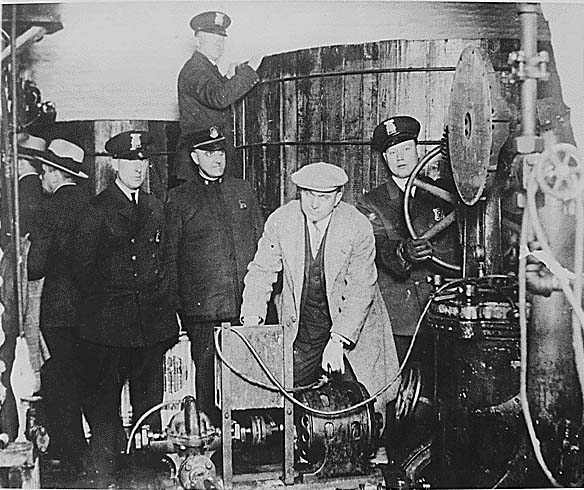
Finally, farming has brought us the one thing humanity just can't give up: alcohol. Yes, thank agriculture for the drink that may make the night better, but makes tomorrow worse. Hilariously, in roughly 1046 B.C.E, a Chinese ruler tried to ban wine, but was unsuccessful in his attempts. That sounds strangely familiar...
Social Variation in the Age of Agriculture
Farming helped people survive in environments they couldn't before. This is because humans could rely on animals to help them. They didn't have to eat mainly plants to survive in the desert anymore, because someone walked over to that society to sell meat or milk. This most likely contributed to the development of towns in the desert, or in very cold climates (like what the Clovis people did, but without having to worry about the woolly mammoth going extinct).
Then, there are the agricultural village societies that relied more on farming than a government. Women were more equal in some of these societies, and the closest thing they had to a government was the elders telling the youngsters what to do. It seems kind of like anarchy for us today, even when democracies are considered, but they were mostly civil. I wonder why that's the case...?
Finally, there are the chiefdoms, or the society that is the most like ours today. Chiefdoms still exist today, but they are not the same as kings or presidents. Instead, they are led by chiefs that relied on the people to trust them, usually without force. It's similar to how religious figures can have a group of people listen to them without having to resort to violence or the police.
All of those eventually evolved into what we have today: modern society. And it all started from people learning how to selectively breed species and put seeds into the ground to make it grow.
Welcome to the second blog post. It's been a lot of hard work keeping up with college work, but I'm always excited to talk about the readings.
We have a very familiar topic today, and that's farming. More specifically, it's society after agriculture was discovered by humanity. Agriculture has changed society for the better, but also slightly for the worse, and that's what the readings have talked about today.
If you're following along, the sections I'll be talking about today are Breakthroughs to Agriculture, The Globalization of Agriculture, and Social Variation in the Age of Agriculture.
Breakthroughs to Agriculture
Humans used to be primarily gatherers and hunters until they discovered how to take advantage of animals and plants. That's when humans started domesticating a variety of animals and plants for mainly farm work.
When reading, some readers might be confused when they read the small amount of animals that were domesticated back then, since exotic pets exist. However, domestication is not the same as taming; domestication is selective breeding to make animals and plants benefit humans. It takes generations of breeding to domesticate, not a few months of training a wild animal. Here's an example of the domestication process.
Anyway, the rise of agriculture coincided with natural global warming roughly 10,000 years ago, which may mean that humans farmed to adapt to the environment. Ironically, farming is also part of the reason global warming exists today, but the global warming back then was completely natural. It was the end of the Ice Age, and the woolly mammoths were dying out, so how about domesticating other large animals for food instead?
Oh, and farming is different in different parts of the world. North America wasn't planting kola nuts, and Africa wasn't planting domesticated teosinte (that's corn, by the way). This book knows not to generalize the world and its crops, and I'm happy it didn't.
The Globalization of Agriculture
Gatherer-hunters (that's the order the book says) and farmers used to live together in harmony, before most people saw gathering food as "ancient" and "uncivilized." Don't get me wrong; gathering and hunting is still a pastime for plenty of people today (such as mushroom gathering and hunting for sport). However, most people see it as just that: a pastime. Only a few do it today as a lifestyle.
A very sad example of this is Ishi, the man who was the last of his gatherer-hunter group, the Yahi. Unfortunately, Americans flooded California and massacred most of the Yahi community, and eventually, Ishi was the last of his people. After educating people about his culture for five years at a museum, he passed away from tuberculosis. This was the dark side of farming: driving non-farming cultures to extinction.
On the plus side, the human population increased exponentially! It took humanity 5,000 years to go from 6 million to 250 million people, an amazing achievement for any species. And this is despite the numerous diseases that spread because of farming. Many of those diseases would either have vaccines today (rabies, chicken pox, measles) or even be eradicated as of 2019 (smallpox). So humanity has solved some of the problems farming has brought us.
Finally, farming has brought us the one thing humanity just can't give up: alcohol. Yes, thank agriculture for the drink that may make the night better, but makes tomorrow worse. Hilariously, in roughly 1046 B.C.E, a Chinese ruler tried to ban wine, but was unsuccessful in his attempts. That sounds strangely familiar...
Social Variation in the Age of Agriculture
Farming helped people survive in environments they couldn't before. This is because humans could rely on animals to help them. They didn't have to eat mainly plants to survive in the desert anymore, because someone walked over to that society to sell meat or milk. This most likely contributed to the development of towns in the desert, or in very cold climates (like what the Clovis people did, but without having to worry about the woolly mammoth going extinct).
Then, there are the agricultural village societies that relied more on farming than a government. Women were more equal in some of these societies, and the closest thing they had to a government was the elders telling the youngsters what to do. It seems kind of like anarchy for us today, even when democracies are considered, but they were mostly civil. I wonder why that's the case...?
Finally, there are the chiefdoms, or the society that is the most like ours today. Chiefdoms still exist today, but they are not the same as kings or presidents. Instead, they are led by chiefs that relied on the people to trust them, usually without force. It's similar to how religious figures can have a group of people listen to them without having to resort to violence or the police.
All of those eventually evolved into what we have today: modern society. And it all started from people learning how to selectively breed species and put seeds into the ground to make it grow.
Subscribe to:
Comments (Atom)